I feel that many of my blog posts recently
have been negatively focused. Talking about things like the genocide doesn’t
make for happy reading. Therefore, I decided I would focus this post on my
favorite things about this country, so here goes.
1. The people here are amazing. I’ve mentioned their resilience before. But, they truly are truly kind people despite all the challenges they face. Similarly to Ethiopia, if you see someone on the street that you know you stop and ask how they are and about their family. But, not just out of culture, but because they truly care. I feel like I am leaving yet another family as I prepare to leave Rwanda. I feel lucky to have so many people all over the world who care about, and who I care for.
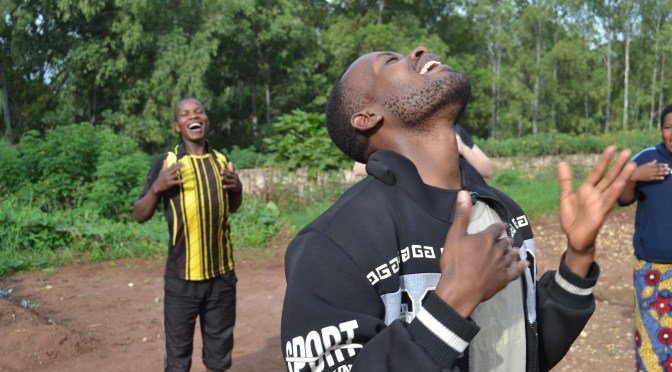
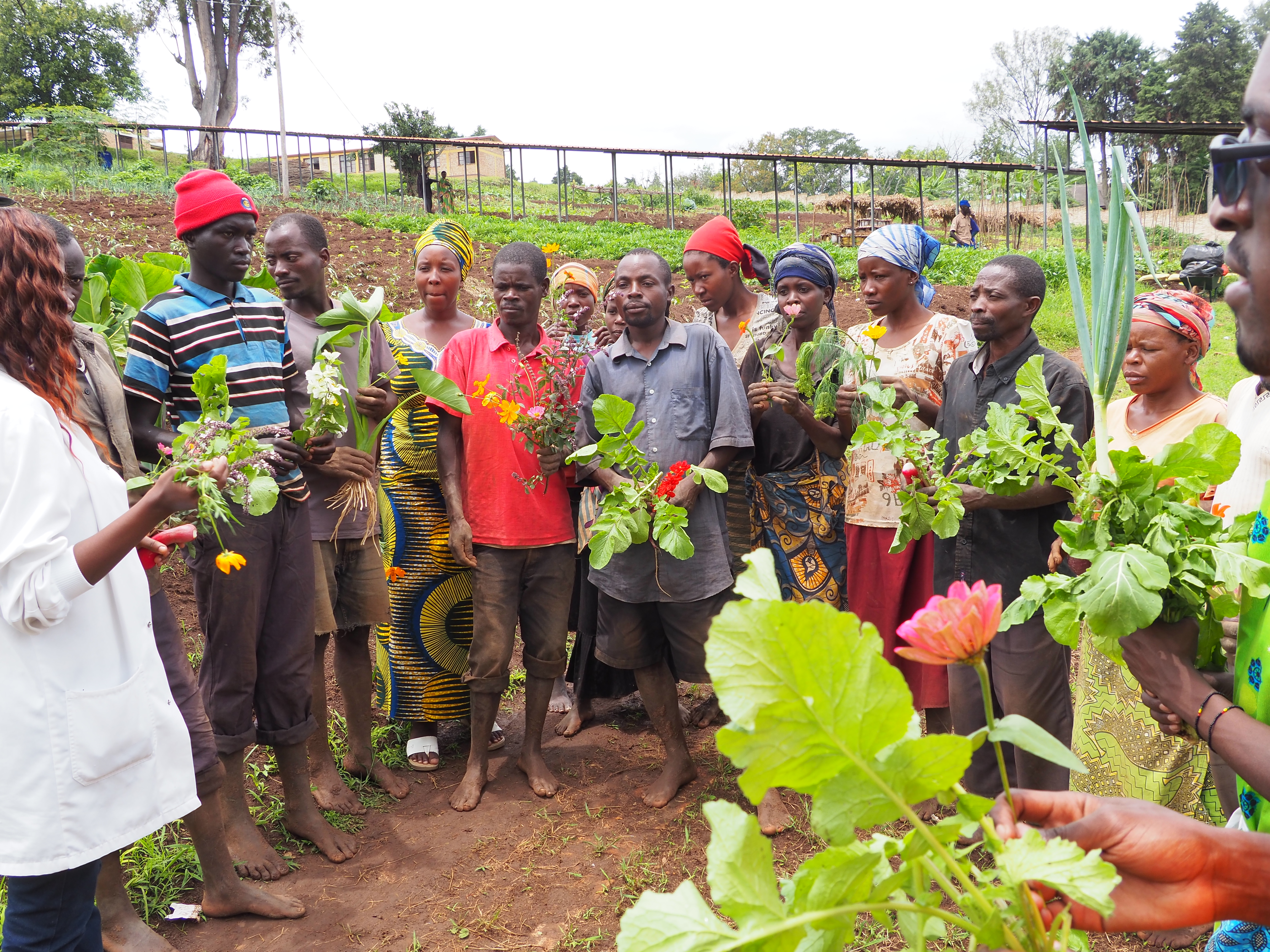
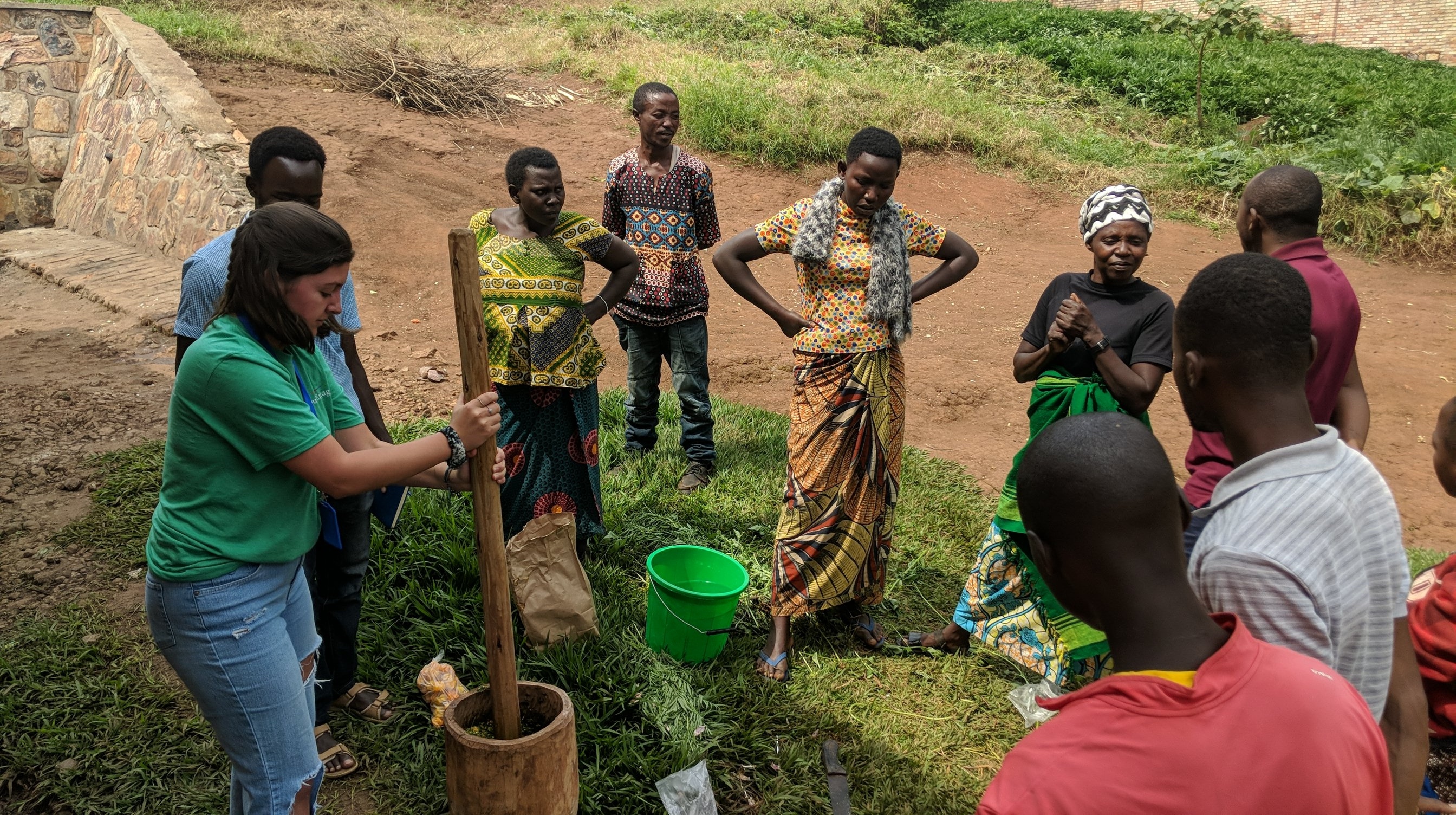
Locals learning about farming and nutrition. Us doing new things is always a source of entertainment for the locals.
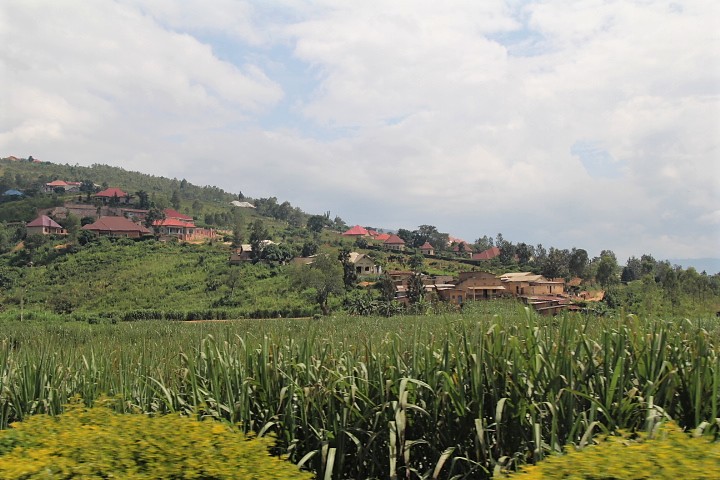
2. The environment here is spectacular from the weather to the green policies the country has in place. Walking down the street, you rarely see trash, and the green lushness of the country is wonderous.
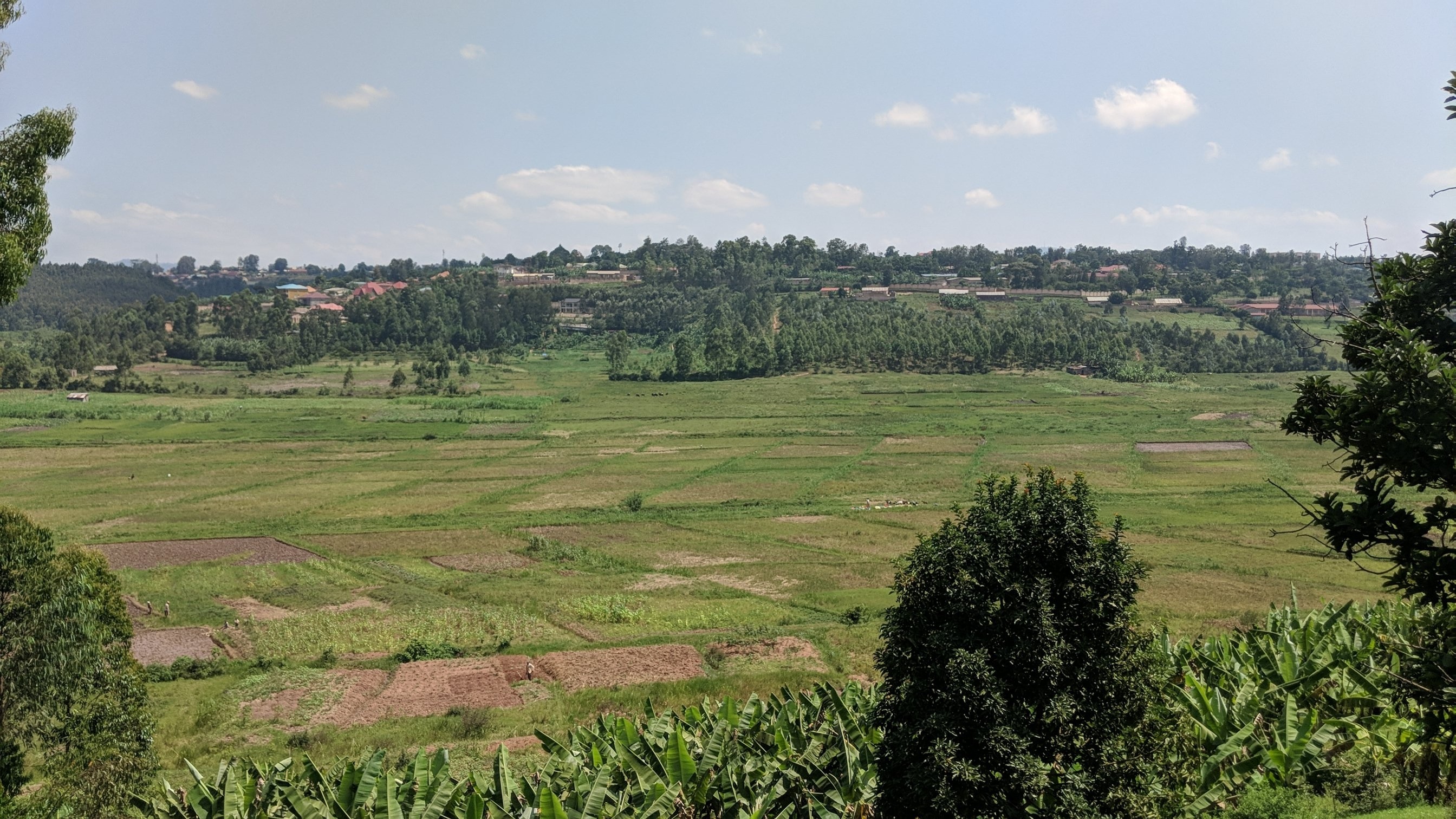
The valleys here are mostly composed of rice fields while th hills are used for housing and other forms of agriculutre. Fields of maize and houses on a hill.
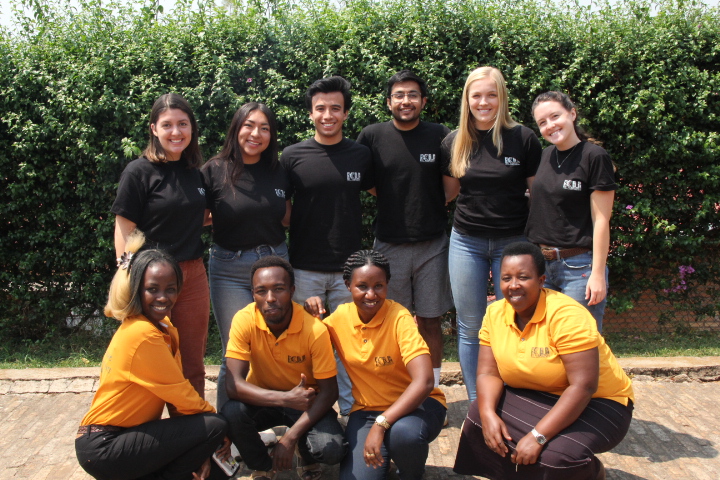
3. The Kuzamura Ubuzima staff could probably go under “the people,” but they are so great I feel like they deserve their own section. The KU staff went above and beyond in every sense to support us. They helped with our work, our cultural integration, and even our individual problems. They even opened up about their personal lives and agreed to be interviewed by our students so they could know more about Rwanda and life in this wonderful country. If you want a non-profit to support, these people deserve your money! About the staff.
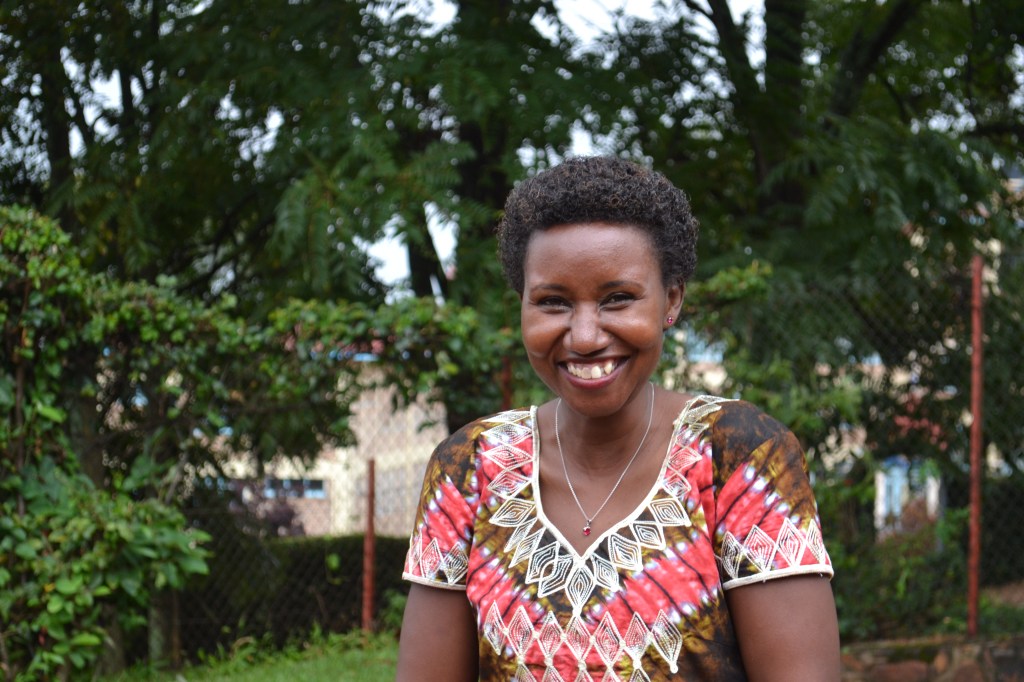
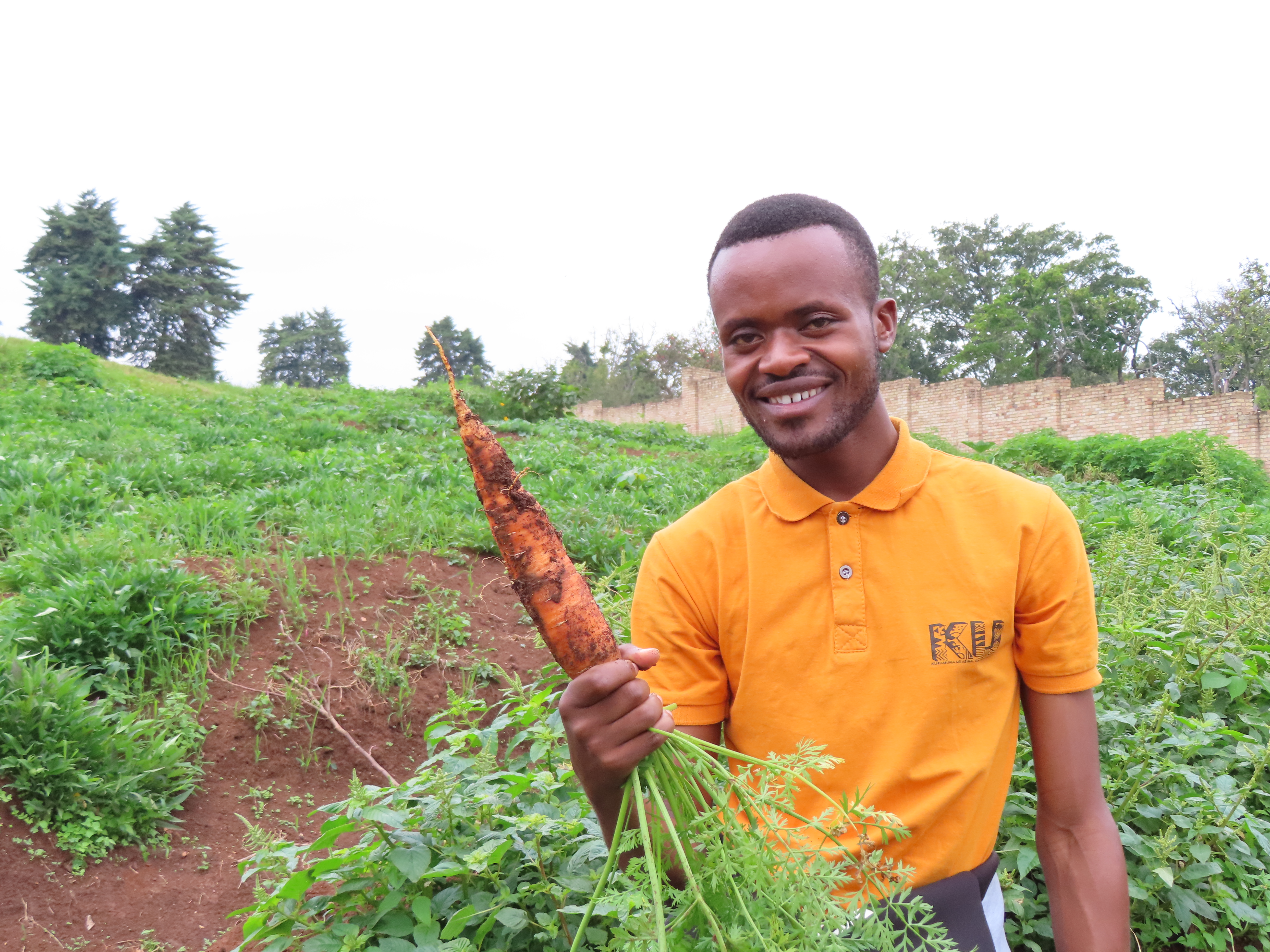
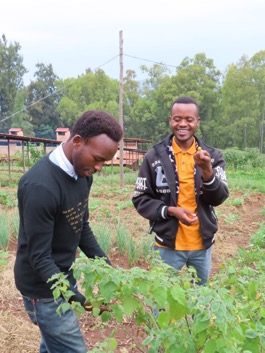
Our amazing KU staff with the students. Laurette, KU’s fearless leader, wearing Kitenge.Emmanual holding a carrot from the farm.Emmanual and Alex are affectionatley known as Emmalex.
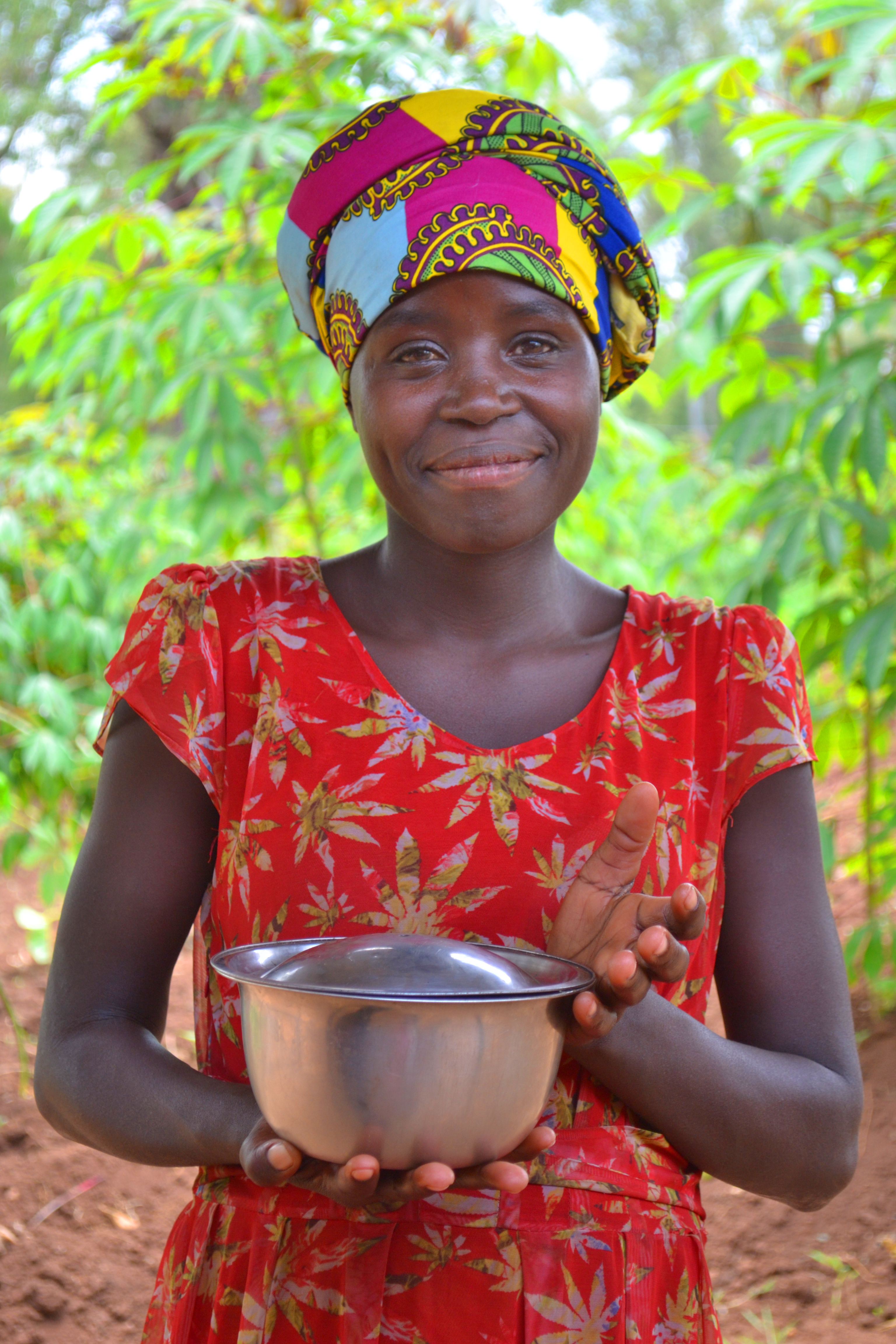
4. Kitenge clothing is the traditional method of using very colorful patterns and styles to dress. Rwandans are very proud of their Kitenge, and it is very common to see women in dresses, and men in shirts made in this style. I even got a Kitenge vest hand made in the style, although mine is admittedly more subdued than many of the patterns.
Traditional Kitenge clothing.
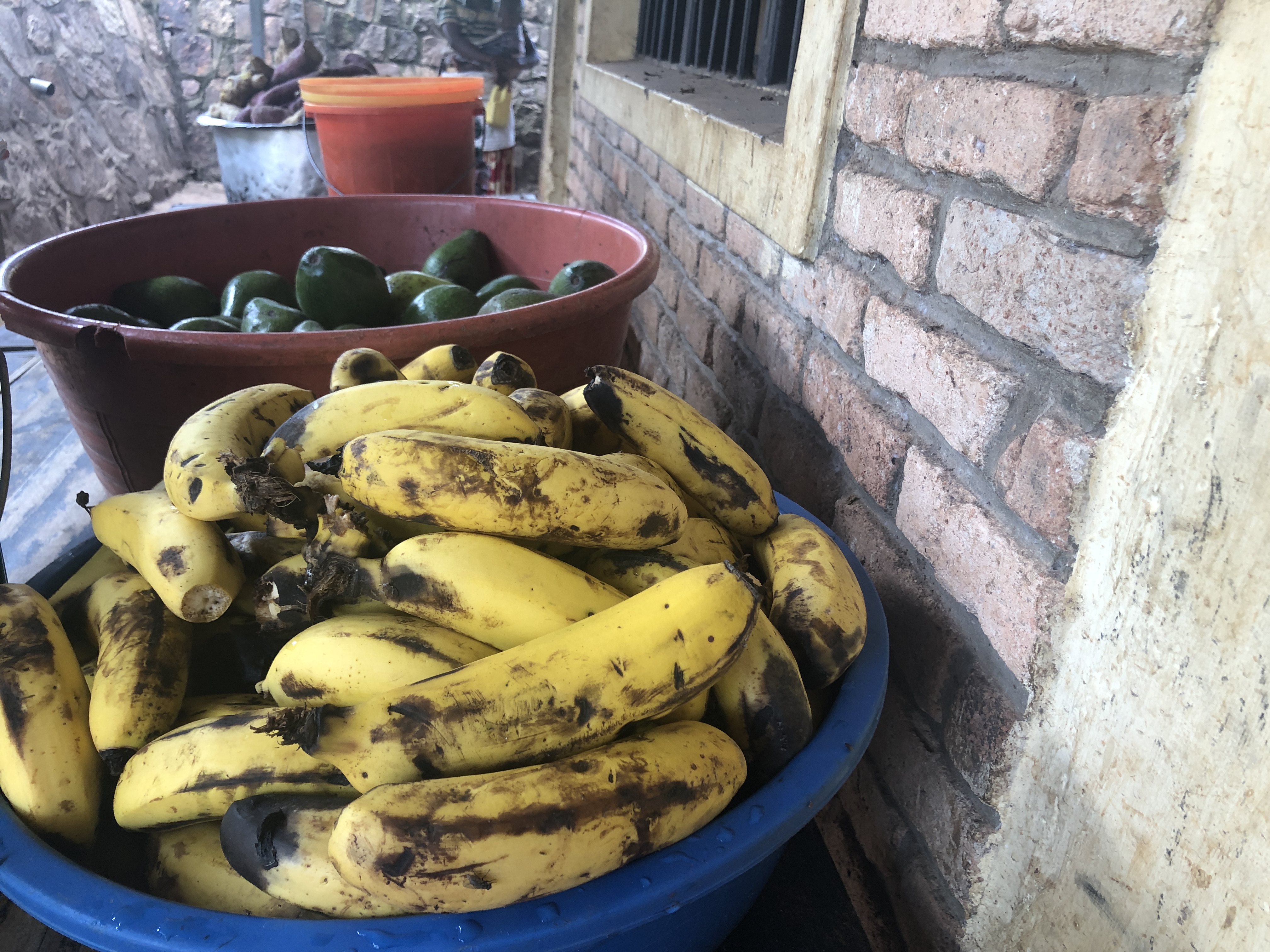
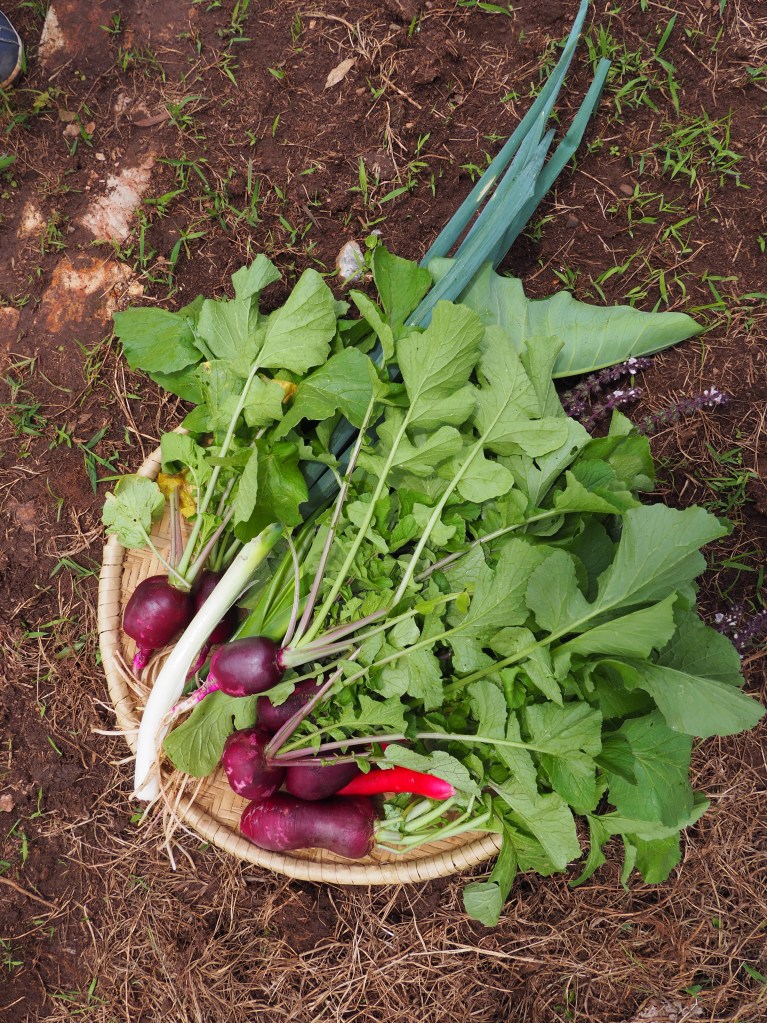
5. Fresh fruit (and veggies)! I know, out of all the things I could have picked I go with my stomach. But, if you’ve ever had fresh fruit picked the day before ripe off the tree you understand. The fruit here is so tasty and fresh. I will miss eating passion fruit and baby bananas every morning with breakfast. If anyone knows where I can buy Tamarillos (known locally as Tomato Tree fruit) hit me up!
Bananas and avacados picked that morning.Veggies straight from the farm taste better!
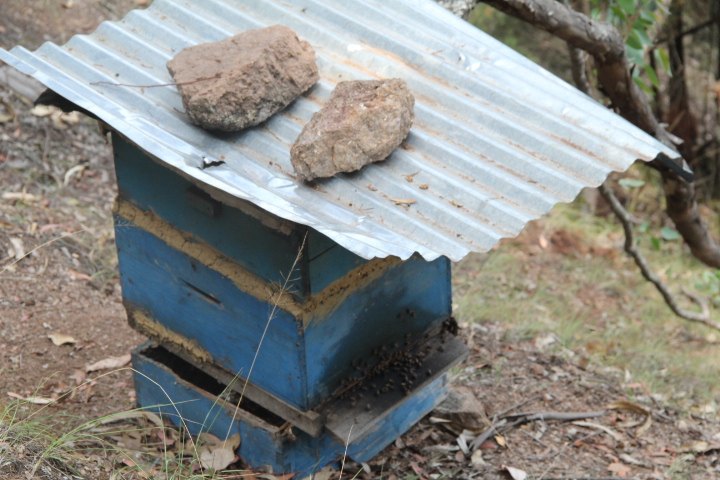
Bonus: Also, it wouldn’t be me if I didn’t say BEES! Even though I didn’t get to play with any this trip. 😦
Modern beehive
I feel completely honored and privileged to have been able to participate in this program and to feel accepted into Rwanda by all the amazing people I’ve met here. It would be impossible to sum up my experience in a simple post like this, but I hope you can see from these things how rich and beautiful a culture Rwanda has.
I have one final blog post going up in a few days, so keep an eye out for it. It should be a doozy.
Alright readers, it’s time to have a talk. No, not that “talk” the talk about labeling countries like Rwanda and Ethiopia. I doubt there is a DukeEngage participant, or Peace Corps Volunteer who on announcing they were going to Rwanda or Ethiopia didn’t get comments like “the genocide country,” “Isn’t that the country with all the starving kids,” and the like. While many of you have even said these things to me, I want to impress on you that these generalizations and stereotypes, while perhaps based on historical truths are harmful.
You see when you generalize a country to its worst moment, or its hardest trials you are suppressing them. You view them as inferior, as backward, and through a patronizing lens that has been so hurtful throughout history and still plagues aid and development work. Yes, the genocide happened, yes, Ethiopia had a famine and is still struggling to feed its poorest, but these are not the attributes that define the countries.
This post isn’t intended to be just a rant, rather an opportunity to learn. So instead of defining a country by its worst moments in history, here are some ways to think of them in a fairer light. When you talk about Ethiopia, why not say “oh, the birthplace of coffee,” “oh, isn’t that the place that has over 80 different distinct ethnic groups,” or “isn’t that the country where a new Prime Minister just appointed a cabinet with 50% women to increase representation?” When thinking about Rwanda you could go with “the country that has seen so much improvement in recent years that it is used as an example for a country’s capacity to improve and develop,” or “the country that is famous for its work in reconciliation and peace building.”
By changing the way you think about a country and its people you elevate them. You allow them to be more than their worst moments, and encourage growth, development, and friendship. Now, I am aware that for many of us, all we will know about a country is the major issue that stands out about them. In those situations, I encourage you to reframe your statements. One way to accomplish that is by opening up a conversation, “you know, all I really know about Rwanda is what I’ve heard about the genocide, I’d love to know more.” By intentionally putting yourself into a learning position you open yourself to conversations instead of reducing the recipient to a “yes” or “no” answer. In a world where words matter, now more than ever, using these simple strategies brings you closer to your conversation partner, as well as a culture and history that you might find interesting.
Now, all that being said. Things like the genocide are still a prominent and important part of history and deserve to be discussed. So, for the rest of this post, I want to share some observations about Rwanda in the wake of the genocide.
The students and I recently visited the Kigali Genocide Memorial Museum. There we saw some of the causes, impacts, and effects of the genocide. For those of you who ventured a guess, you’re right, colonialization played a big role in its instigation (not to mention how Western Society completely ignored the signs and direct warnings and are complicit in allowing it to happen). Colonizers exploited and worsened ethnic divides, using them as a means to divide and control the population. These fires were stoked until one day in 1994 the conflict erupted with a Hutu massacre of around a million Rwandan Tutsis. The horrors that happened during the genocide cannot be overstated. From the intentional targeting of children to ensure the Tutsis could not repopulate to people buying the bullets for their killers to use so that they could be shot instead of beaten to death.
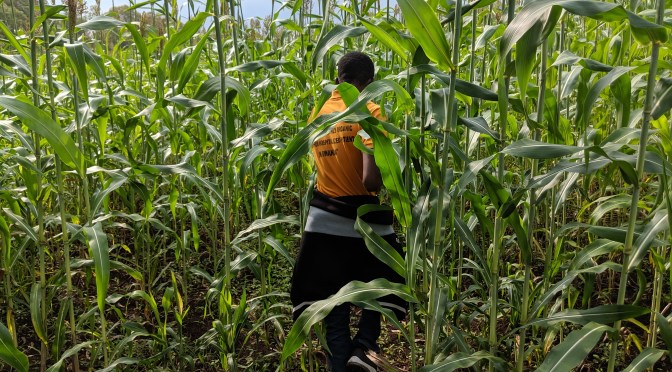
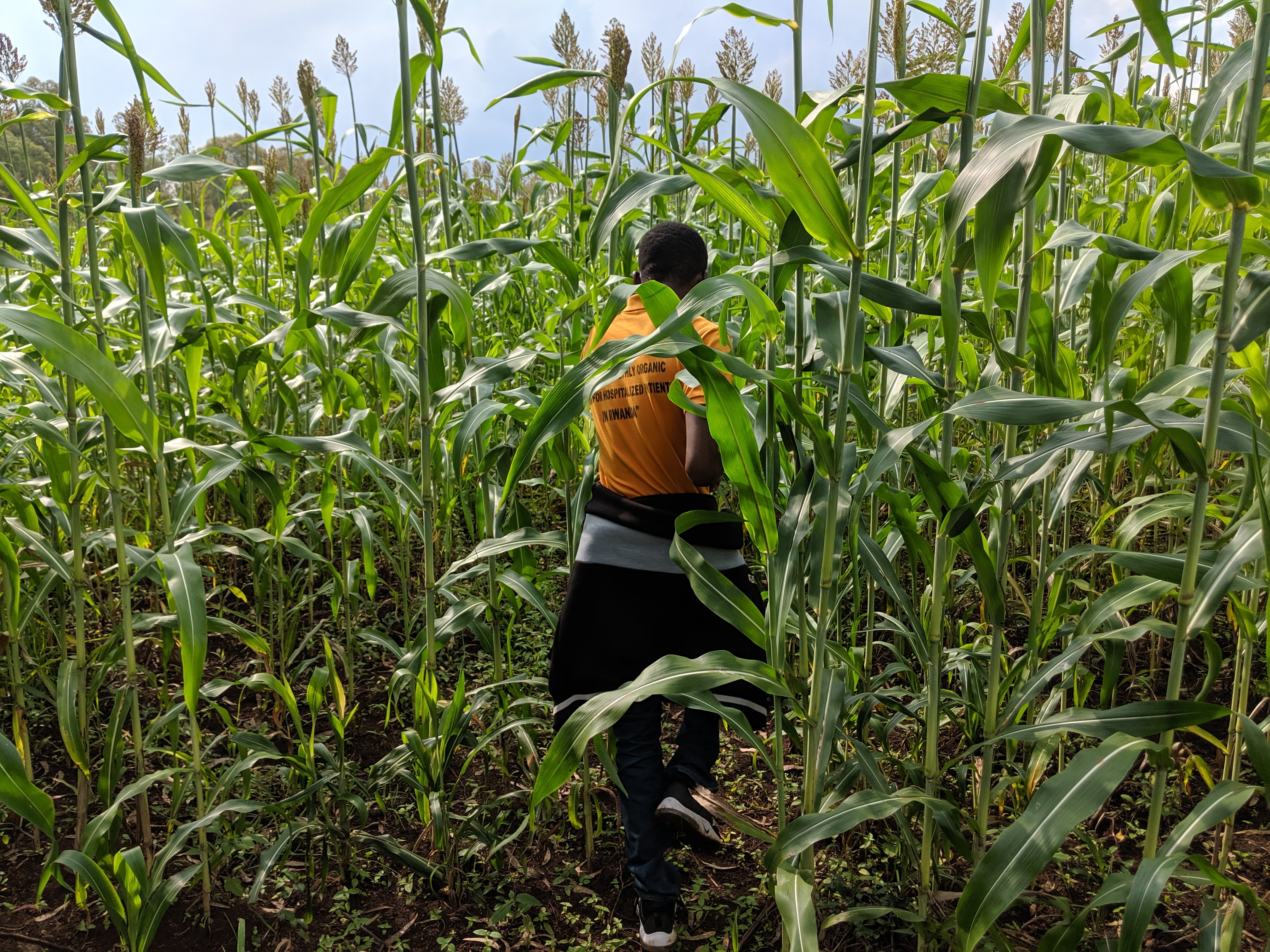
This week the students interviewed the staff of Kuzamura Ubuzima (KU) our partner organization and suffice it to say each interviewee was deeply impacted and scared by the events of ’94. Personally, the story I will always remember is when one of the staff was giving us a tour of the farm. As we walked through a field of Sorghum and he said “Rwandans love fields of Sorghum,” when asked why he said, “because they are great places to hide…at least until they send the dogs in.” The casualness of the statement and the impact of the words left us speechless; each of our staff, along with most adult Rwandans have these stories.
Sorghum fields are good to hide in.
But, these types of stories can be looked up online. What I want to highlight is the often overlooked aspects of the genocide. The healing, the reconciliation, and the mind-blowing resilience of its survivors. You see, despite each of our staff sharing these stories, what really defines them is what they said and did after; they forgave, they healed, and then turned their attention to helping others. If you want to understand more about how that happened on a country-wide level, I suggest you do an internet search. Some aspects with plenty of information you could start with include Gacaca Courts, Peace Villages, and the like. Here I will write about what individuals did. You see, many of them went home and found themselves living next to their families’ murders. You’d think that this would lead to more tension, conflict, and hate. I’m sure in some cases that’s true. But, for most, it isn’t. Instead, Rwandans (including our staff) met with their neighbors, they found common ground, fostered understanding, and began a long healing process. For some perpetrators, that involved helping on their neighbor’s farm because with the loss of their fathers and sons the crops were rotting. For others, it meant rebuilding the houses they had burned to the ground. This has led Rwanda to be considered one of the safest countries in Africa. It has led to the extreme boom in development of its infrastructures, and green laws that include the banning of all plastic bags in the country. Today when you ask our staff about living next to their family’s killers they respond with how they have forgiven them. How when they walk down the street they greet them, or how their children play together after school. This forgiveness isn’t an act, it isn’t isolated, it is nearly universal, and for those of us on the outside looking in it is impossible to understand.
Despite this forgiveness, the wounds never fade. The absences are felt daily, but never more than on occasions such as weddings and birthdays with the empty places where mothers, fathers, sisters, and brothers should stand. That is why you can’t drive more than 30 minutes on a major road without seeing a memorial. That’s why communities come together yearly to remember their lost loved ones. And that’s why the country has vowed to “never forget.”
I could go on for days about the changes Rwanda has made in recent years (not forgetting the criticism that has been levied against the country as well), but this post is already long. So instead I will leave you with this. Words matter, they portray thoughts and impressions and impact those who hear them; they can create friends or enemies, they can tear down or build up. This is, perhaps, never more evident by the words that stoked the hatred surrounding the Rwandan Genocide. I hope you will use Rwanda’s story to hold up this and other countries and people and to choose words that build up or at least open a dialogue. Yes, in 1994 Rwandans committed one of history’s most infamous acts of violence. But, don’t leave out the fact that they then took responsibility and out of tragedy built something beautiful.
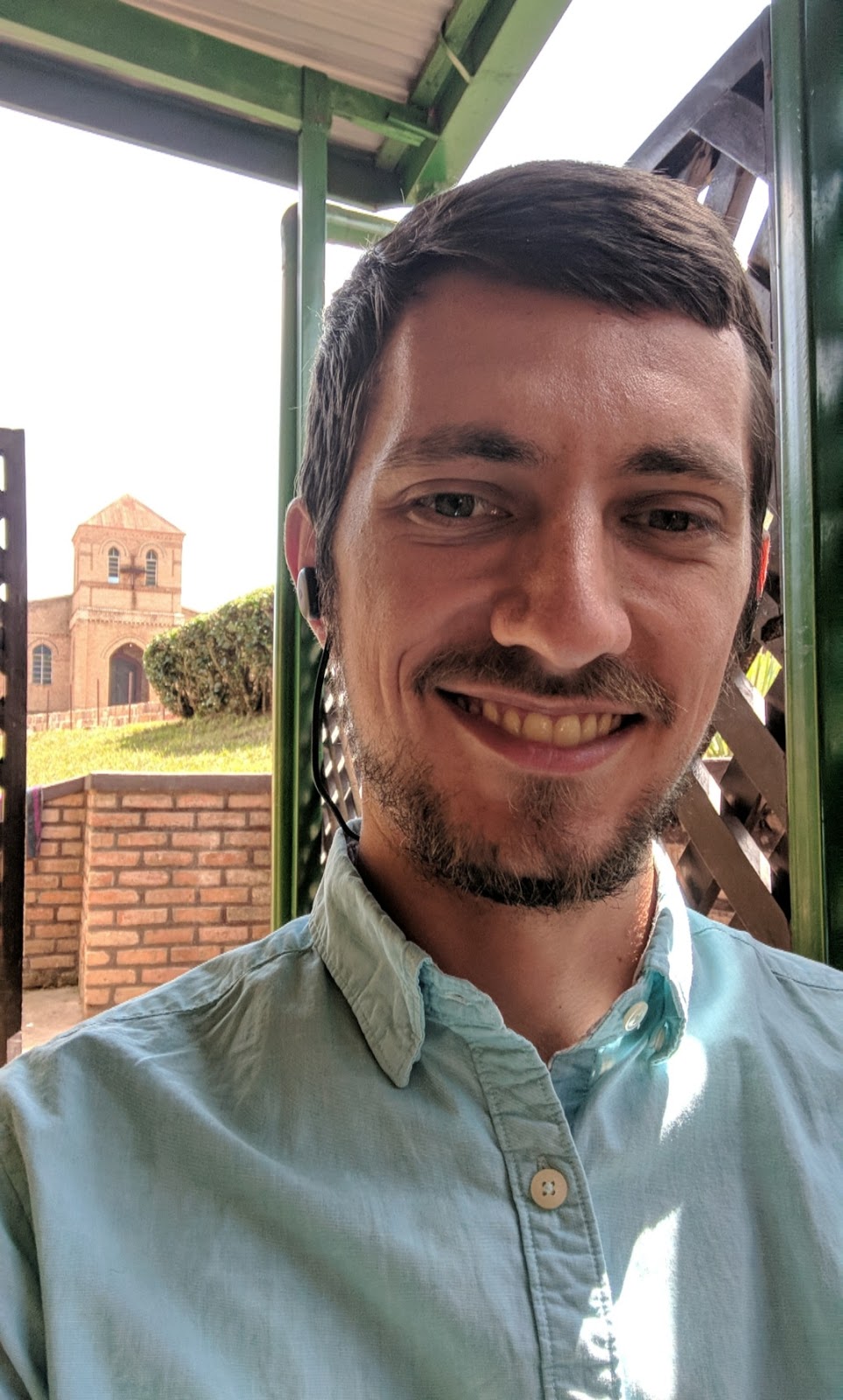
Look who needs a hair cut! Where’s your favorite barber when you need him?
It’s hard to believe I’ve already been in Rwanda for a month. We’ve passed the half-way point in our program here and it seems like there is so much left to be done. Our students are hard at work, but, I know they have begun to understand the daunting challenges they’ve taken on. As previously mentioned, we have three groups of students working on separate tasks.
Our Nutrition team has taken on creating a unified curriculum manual for use by our Rwandan nutrition educators. They also are working to develop a more effective Monitoring and Evaluation plan so that we can better understand the impacts of our work here.
The Agriculture group is developing a comprehensive strategy for improving our farm. Currently, the farm is operating on nearly entirely organic principles, with a few exceptions. We are developing strategies to shift over to a 100% organic farm structure. With all the unique challenges that farming in Africa brings they have their plates full, but some other projects they are working on include an irrigation system, organic pest control methods, a drying/seed starting house, and creating a self-sustaining food forest.
Finally, our Sustainability team is dedicated to providing long term sustainable funding sources for the organization. With an operating budget of less than 30 thousand USD per year Kuzamura Ubuzima (Growing Health), our partner organization, feeds breakfast and lunch to about 110+ mothers and children facing the effects of malnutrition here in Butare. Since the beginning of the project, KU has not missed a feeding even a single day! Probably the biggest challenge the organization faces is how to continue funding our work and allowing the organization to grow and feed the remainder of those in the current hospital, as well as to begin serving other local medical facilities who are also asking for assistance. As with many non-profits, KU faces the challenge of a greater need than they can realistically meet in this stage of their growth and development.
I am truly enjoying working with the students, but, perhaps more impressive is our staff. KU employs five primary staff members, along with a little more than twenty support staff. The KU staff have faced extreme horrors during the 1994 genocide, and yet, they came out more determined and dedicated to helping their country. The country experienced the unimaginable, but they have found a way to forgive, move past, and rebuild their country. Larette, Vanessa, Emmanuel, and Alex especially have been kind enough to share their work, lives, and stories with us and I am extremely grateful that they continue to support us and their community.
If you want to support Growing Health and the amazing work we are doing, please head to the websiteand click “donate”. (One of our projects is editing the website so please excuse our digital dust!)
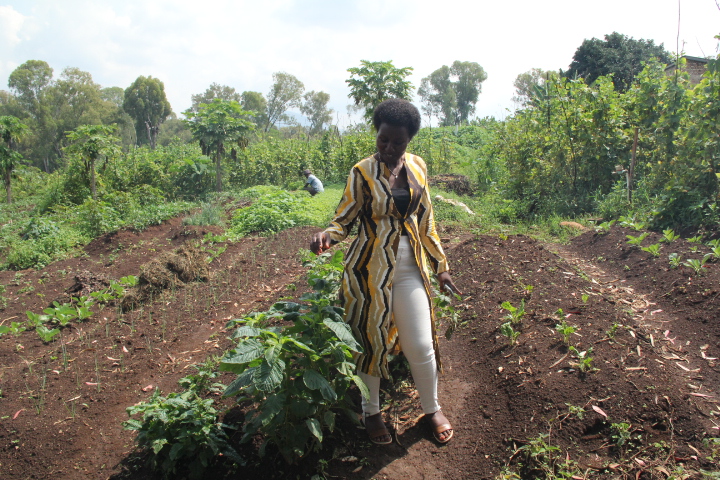
Laurette, KU’s President explains how the farm functions to feed the beneficiaries.
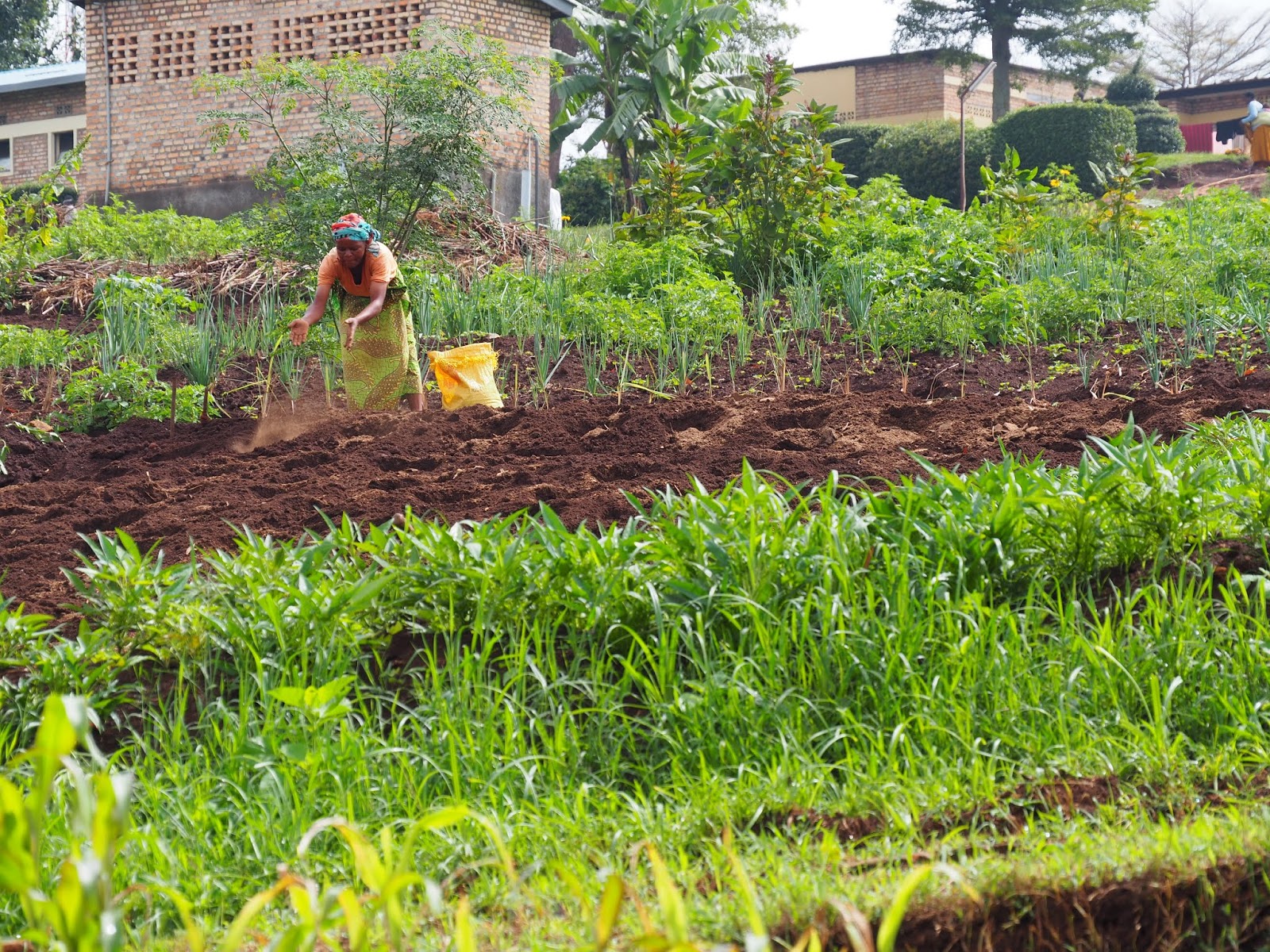
Mulching conserves water and helps prevent weeds. This is especially necessary during the dry season.
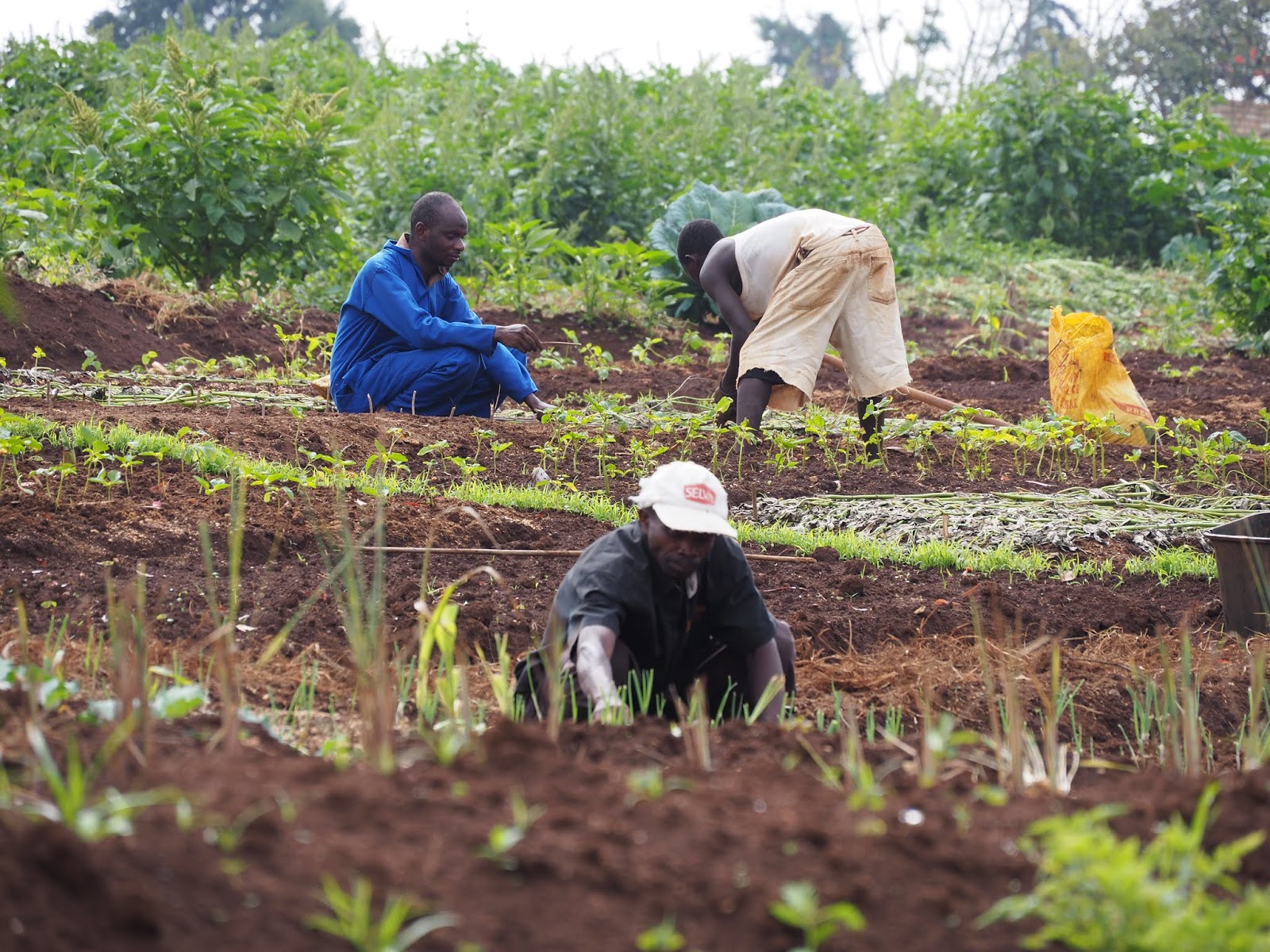
Our farmers hard at work. Every farmer we hire is selected carefully and based on the need of the farm as well as the farmer and their family.
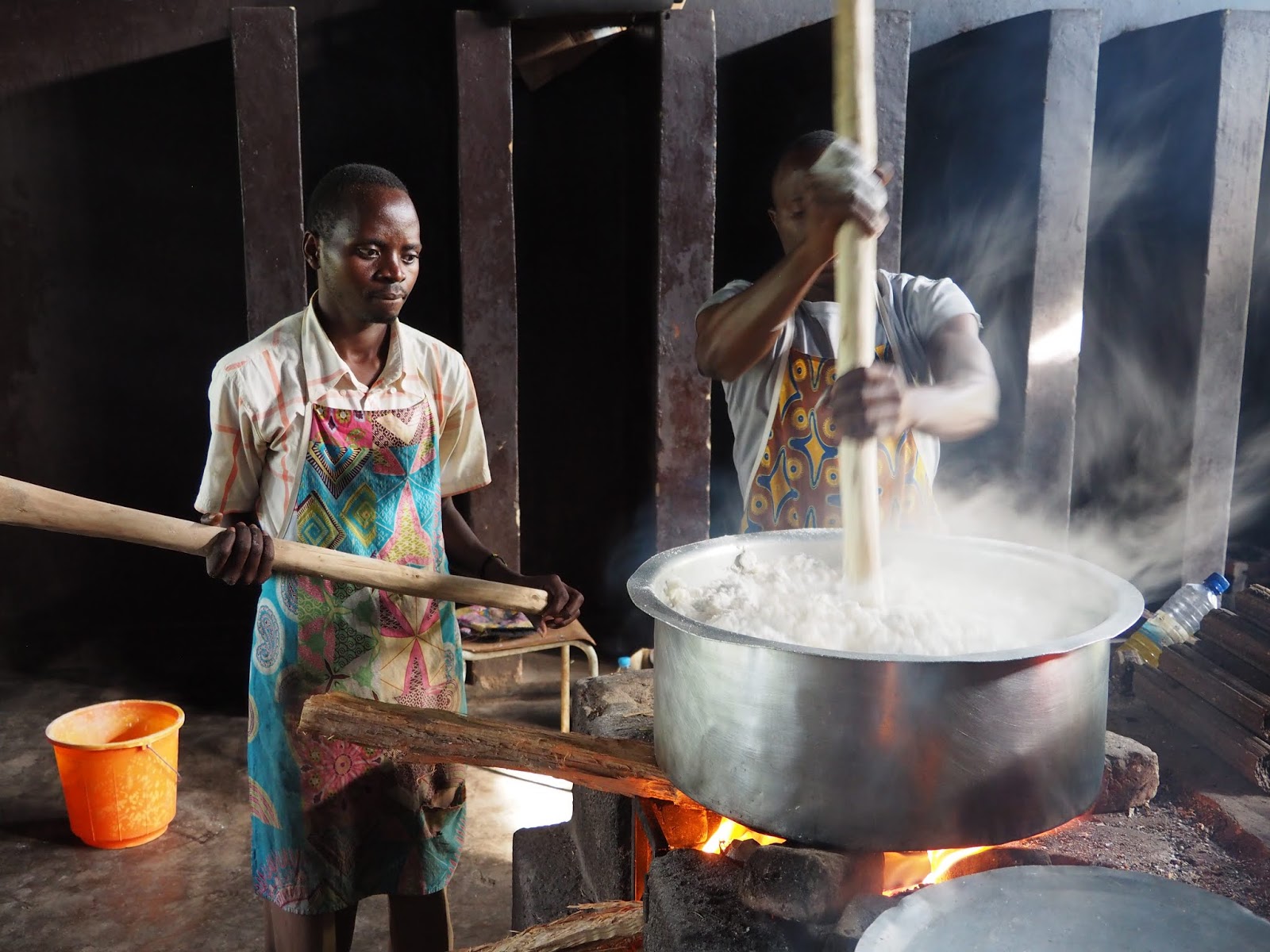
Preparing food for over 100 people is no simple task. Kawngra is a cornmeal biscuit common in Rwanda.
Disclaimer: The information presented here is the intellectual property of Eugene Foerster and does not represent the views, opinions or policies of the Peace Corps (peacecorps.gov), United States Government, Duke University, DukeEngage or any other organization in anyway.
 EthiopiaPCV